


Welcome back to Multicore, coming back to you from a winter sabbatical. I’m back home after some extended time with family in the UK and Switzerland; meanwhile, the entire country of Japan returned to work this week. What better way to get back into the swing of things than the Consumer Electronics Show.
The first official day of CES just wrapped up, which means almost all of the announcements have been and gone. I used to attend CES every year with The Verge, but I have never quite since found it within myself to make it out to Las Vegas as a sole proprietor in the first week of January. But for what it’s worth, it looked like it was a pretty fun show this year. Maybe I’ll return next time.
Instead of attempting to be comprehensive, I’ll focus on seven things I thought were neat and/or notable.
Fujifilm Instax Mini Evo Cinema
Not to kick this list off on an inauspicious note, given how I’ve framed it, but I’m not even sure if this camera is actually at CES — today’s announcement only seems to have happened in Japan. But look, we have to talk about this thing.
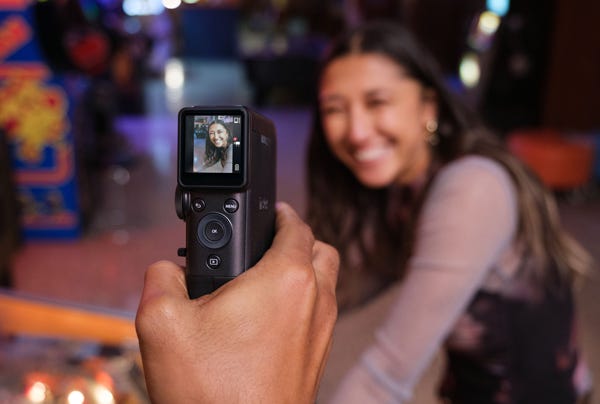
The Instax Mini Evo Cinema is a digital video camera with a built-in Instax film printer. It’s designed to look like the Fujica Single-8, an 8mm camcorder from 1965. It has a 28mm-equivalent f/2 lens and some surprisingly serious-looking attachments like a viewfinder loupe and a grip.
Although the camera can also capture still photos, the obvious question here is how exactly you’re supposed to print video onto Instax film. Worry not, Fujifilm has solved it: QR codes!

So, you can take video of someone and share it with them by printing out a single frame that they can later scan with their phone.
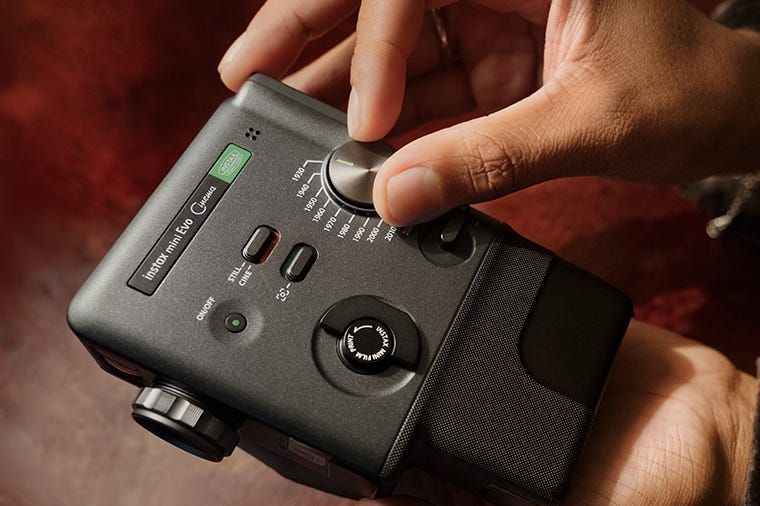
Another key feature is the Taylor Swift-evoking “Eras Dial”, which lets you dial in the vibes of a particular decade. That photo above, for example, uses the 2010s setting, which is intended to recall the early days of smartphone photo filters.
Let’s just unpack that a little. This is an instant film-printing digital camera that is meant to look like it’s from 1965, but it can also turn out photos specifically from 2010 that are also videos that you can view on your phone.
It is bananas and I love it. Though I’m not sure I 55,000-yen-love-it; that would suggest a US price of around $350-400 if an international release is ever confirmed. The Japanese release date is Jan. 30.
I will reluctantly concede to myself that I don’t need another portable photo printer. Still, between this and the X half, I’m all for whatever Fujifilm has been cooking up lately.
Clicks Communicator and Power Keyboard
Clicks, the phone keyboard company launched a couple of years ago by Michael “MrMobile Fisher” and “CrackBerry” Kevin Michaluk, has two big new product announcements.
The first is called the Power Keyboard and it’s unlike any mobile accessory I’ve ever seen. Essentially, it’s a keyboard that clips on via MagSafe or Qi2 and connects wirelessly through Bluetooth, also acting as a small power bank. But it can also pair with up to three devices at once, with Clicks positioning it as a useful mini-keyboard for devices like the Apple TV or even the Vision Pro.
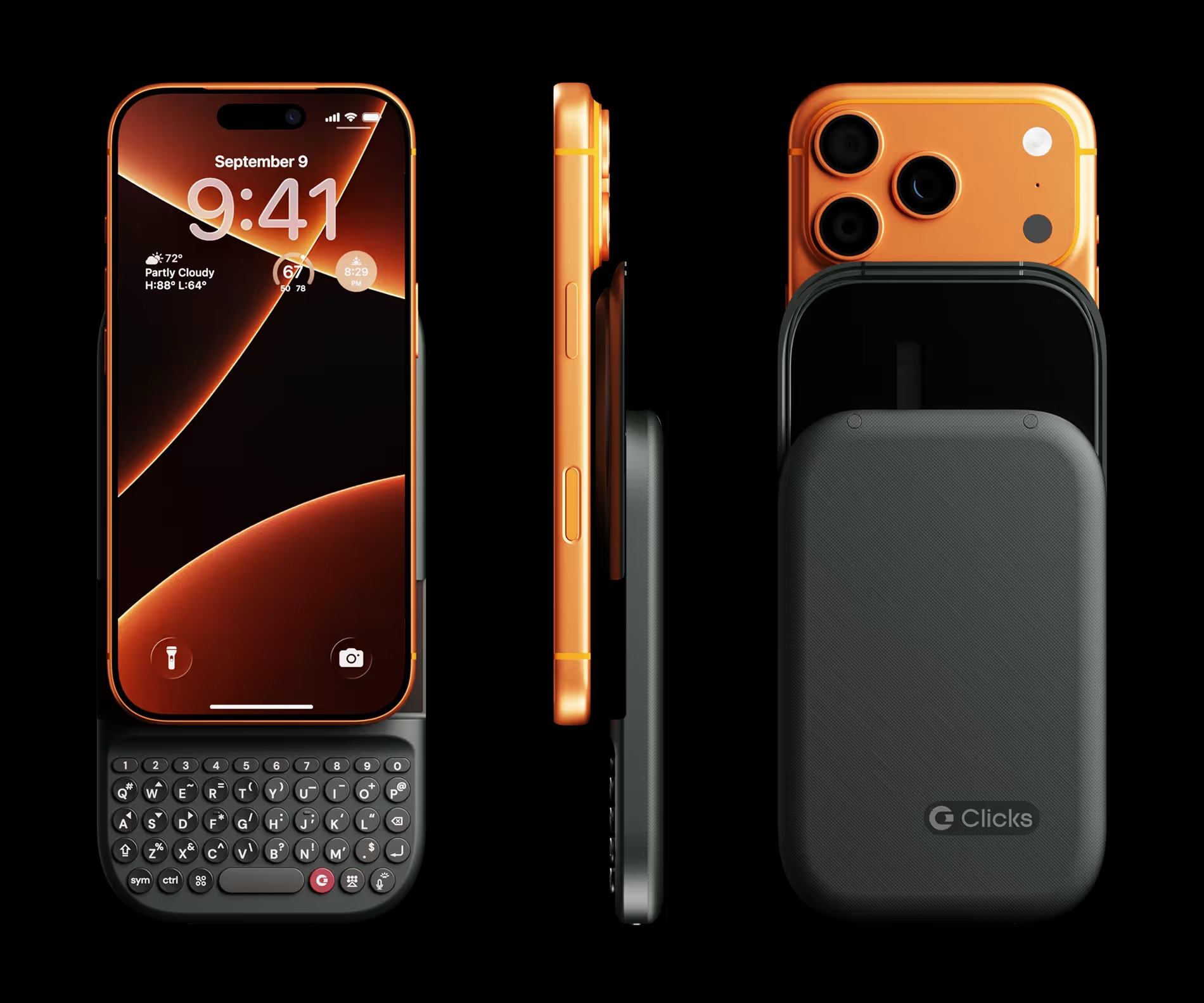
I briefly tried out MrMobile’s personal Clicks keyboard case at Mobile World Congress 2024 and immediately thought it looked and felt like a high-quality product. I never bought one myself, though, mostly because I use phones as they launch and understandably a small company like Clicks can’t immediately get their cases ready right in time. I’d also have to get rid of it whenever I moved to a new device. Also, well, I prefer not to use cases anyway.
This should solve all of those problems while also adding genuinely useful new functionality. It looks like a particularly good fit for the iPhone Air (yep, I’m still using it). At just $79 right now, I’ll be picking one up for sure. It’s set to ship in spring.
The second new Clicks product is a whole lot more ambitious: an honest-to-goodness smartphone.
