I wrote about the Chinese version of the Xiaomi 17 Ultra by Leica the other day, but mostly focused on the design and branding. Today, for the first edition of Out of Camera in a while, let’s talk about how the camera actually performs.
The location this time around was PokéPark Kanto, the new Pokémon theme park that just opened earlier this month in Tokyo. It’s actually a park within a park, now occupying a big chunk of the somewhat retro Yomiuriland, operated by the company that owns the Yomiuri Giants baseball team and the Yomiuri Shimbun newspaper.
The Xiaomi 17 Ultra is all about its zoom capabilities, so what better place to test it out than a pokémon safari?
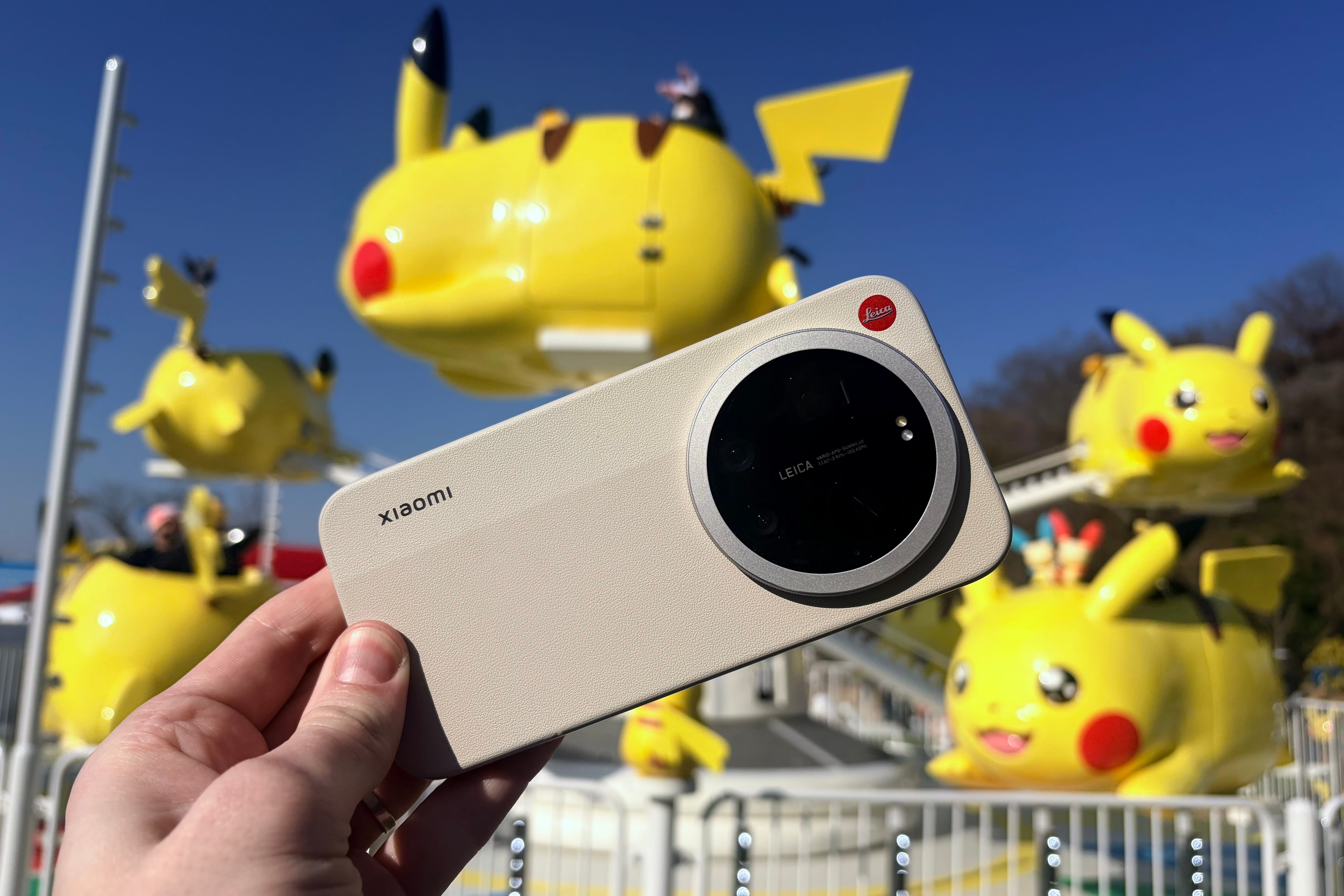
The park is a lot of fun, albeit very kid-focused. You start out by exploring a “forest” and searching for pokémon; I was not disappointed by the amount or the diversity on display.
Once out of the forest, you find yourself in a recreation of a town like you’d find in the games, with shops and rides and a Pokémon Center and so on. I got Vaporeon latte art and saw an unhinged musical show called “Pika Pika Sparks”.
Anyway, here’s what we’re dealing with in terms of camera hardware on the Xiaomi 17 Ultra:
23mm-equivalent lens with a 50-megapixel 1” sensor and f/1.7 aperture
75-100mm equivalent actual zoom lens with a 200-megapixel 1/1.4” sensor and f/2.4-3.0 aperture
14mm-equivalent ultrawide with a 50-megapixel 1/2.76” sensor and f/2.2 aperture
The hardware is similar to last year’s 15 Ultra — my Phone of the Year for 2025 — but combines the separate 3x and 4.3x telephotos into a single module that physically zooms through the 75-100mm range. There’s a slight tradeoff here in that you lose telemacro functionality at the wider end and the aperture is slightly smaller at the longer, but the advantage is a massively larger sensor at 3.2x as well as true optical quality at every focal length, without the need for digital zoom.
The Leica edition of the 17 Ultra also has a physical ring around the camera module that can be used to zoom through the complete range, switch between discrete photo lengths or control other exposure settings.
The other big change is that the main sensor is a new chip called the Light Hunter 1050L, which uses LOFIC (Lateral Overflow Integration Capacitor) technology. This allows for higher sensitivity and lower noise per pixel, boosting performance in low light and HDR.
Xiaomi is making a couple of photography kits for the 17 Ultra, but for this outing I was just using the phone by itself. All shots are unedited and were taken in the default Leica Authentic mode in the regular camera app.