


Following the positive reception to Samsung’s Galaxy Z Fold 8 and ahead of Wednesday’s widely anticipated announcement of Apple’s first folding phone, Xiaomi has joined the party with a device of its own in the newly de rigueur widescreen form factor.
The Xiaomi 18 Fold was just revealed in full in China; I got the opportunity to check it out last week, and I think it’s likely to be a winner.
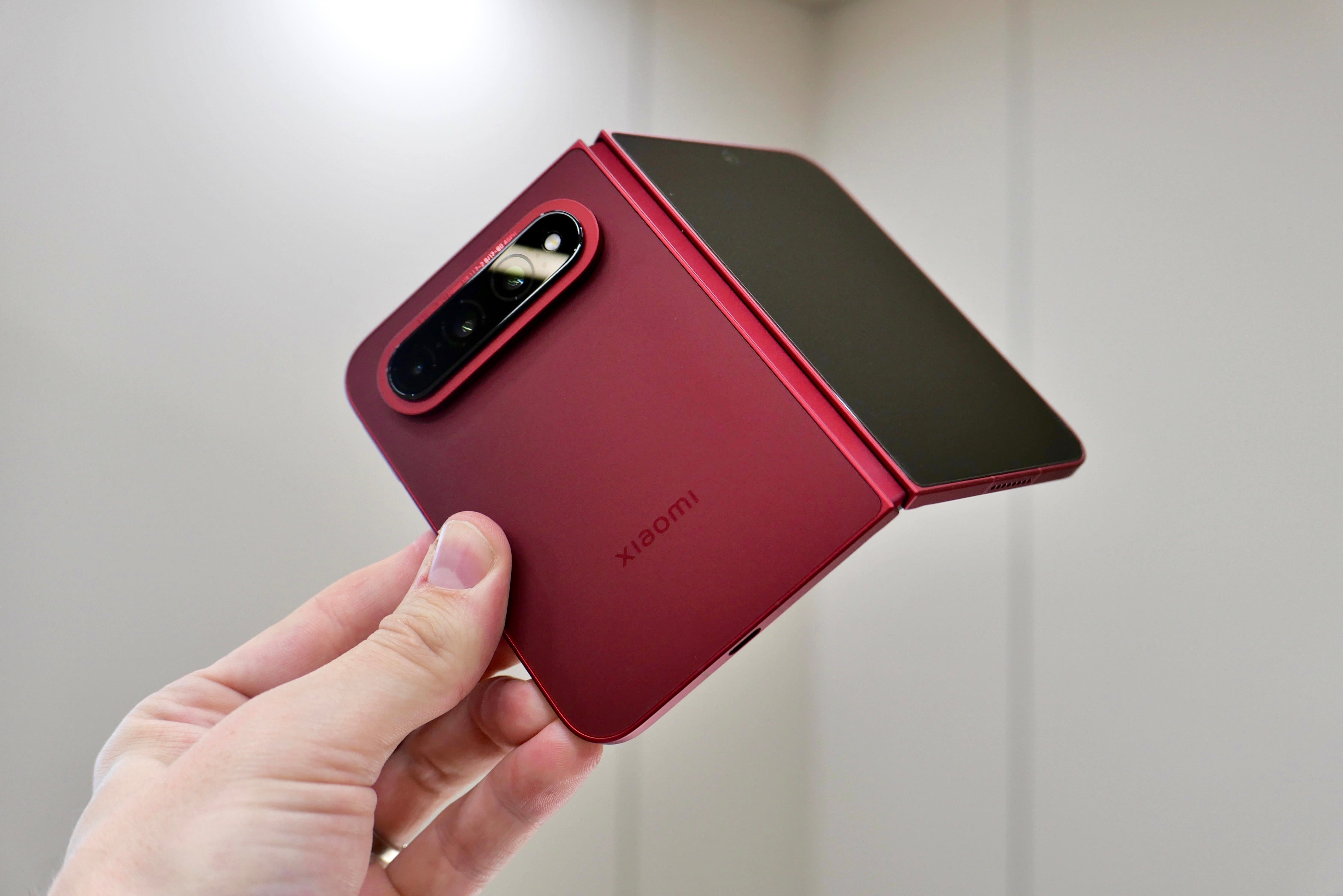
So yes, the Xiaomi 18 Fold is very much in the vein of the Galaxy Fold 8 and what we know of the first folding iPhone, which is to say the outer screen is shorter and wider than a typical smartphone. The inner screen, meanwhile, unfolds in landscape orientation with a wider aspect ratio than other foldables, making it better-suited for video and other content.
This is Xiaomi’s first fold-style phone in a couple of years; the Mix Fold 4 came out in July 2024. Xiaomi is treating the 18 Fold as a whole new category of device; indeed, it’s the first phone announced in the 18 series. The company refers to it as its “first ever mid-sized foldable smartphone”, which is not standard industry language but makes some sense given the smaller passport-ish footprint when folded.
Xiaomi’s take on the idea is a little shorter and wider than Samsung’s; the company says both screens have the same 1.41:1 aspect ratio as A4 paper. The outer screen is 5.3” diagonal while the inner screen is 7.58”, making it a reasonably close match for an iPad mini. It works well in landscape mode for video, but also in portrait orientation for other tablet-style tasks like web browsing.
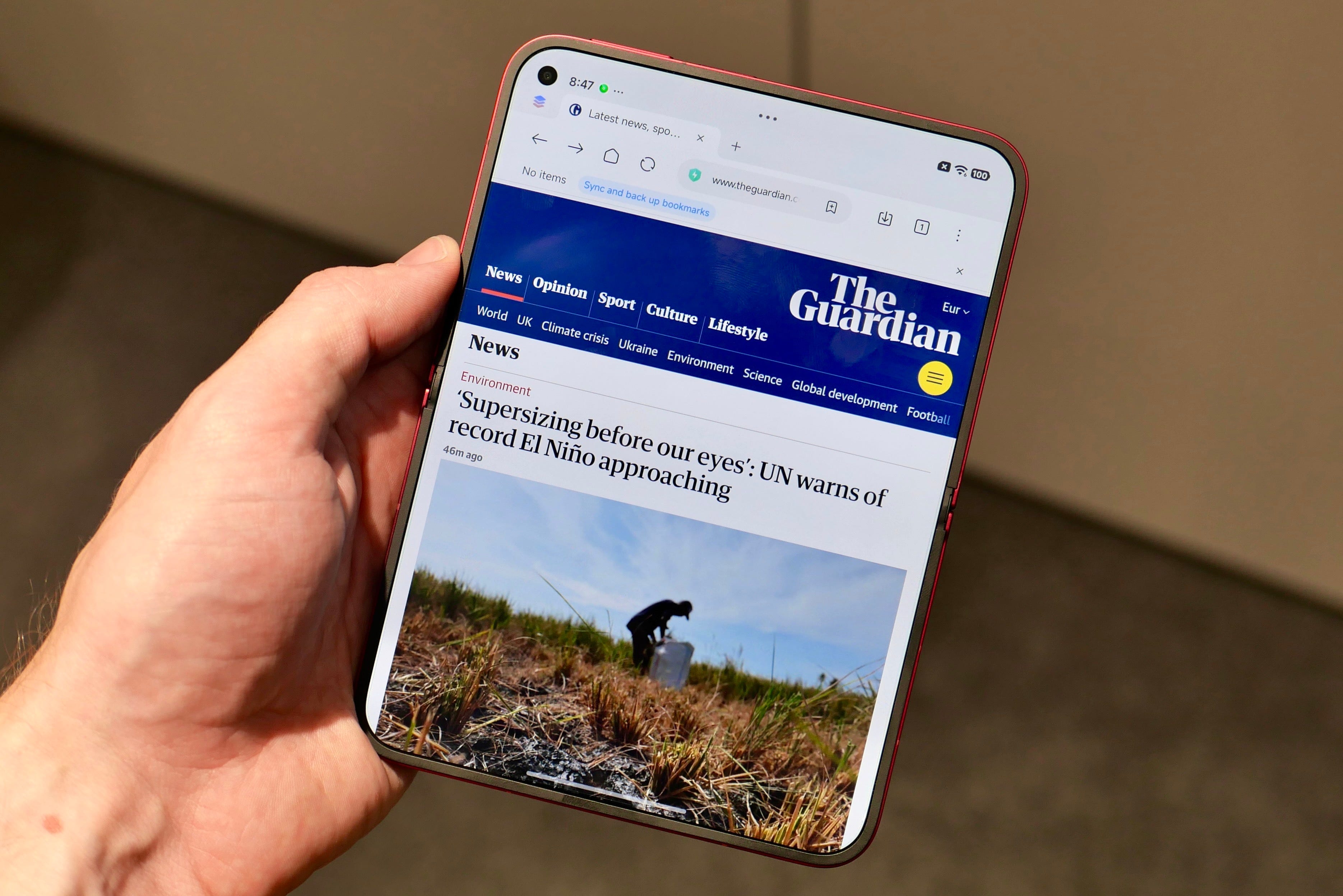
I didn’t get a ton of time to spend testing things like the multitasking interface, which is designed to enable up to three apps side-by-side; I look forward to seeing how that works in practice once I’m more used to the device.
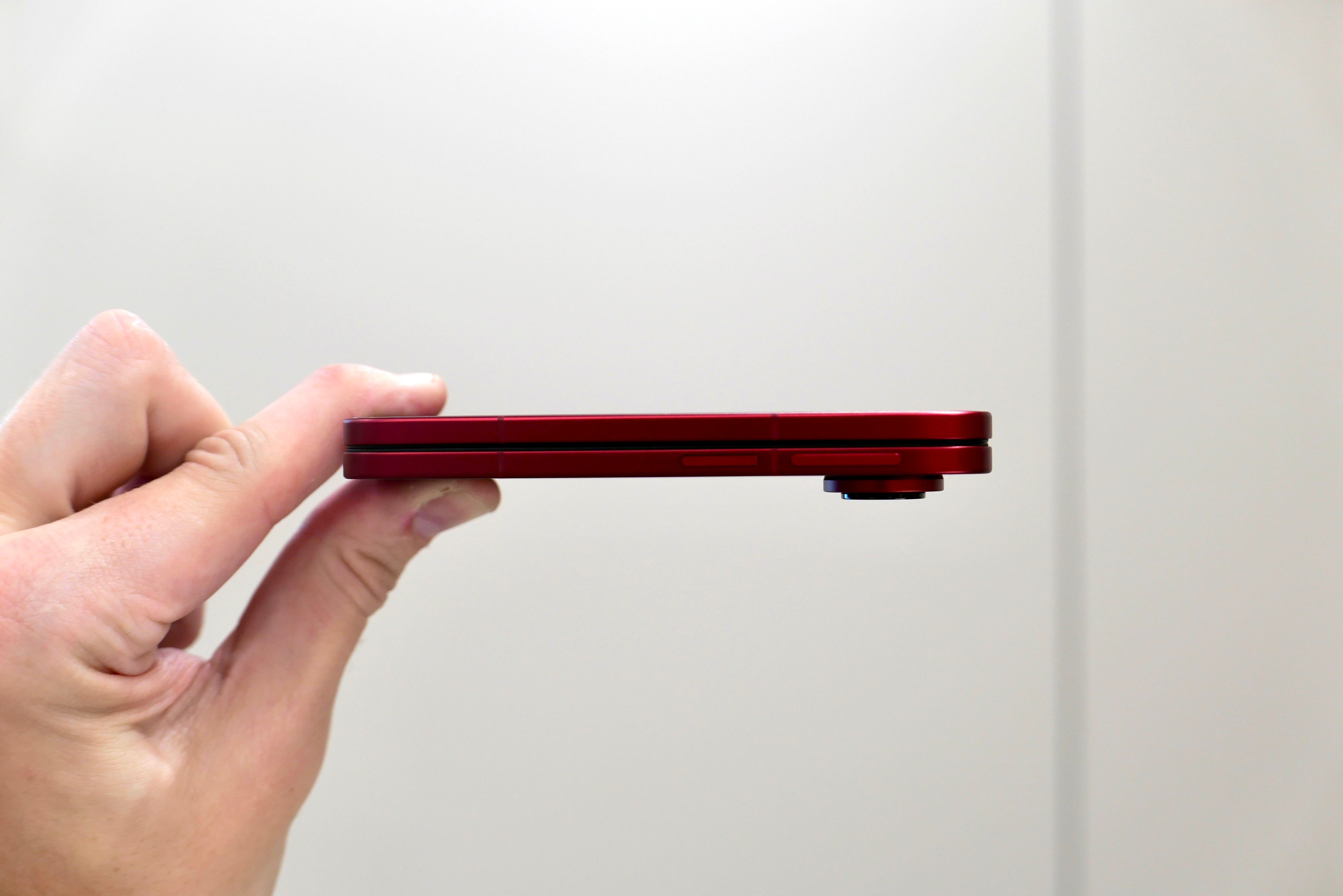
The 18 Fold is Xiaomi’s lightest foldable phone yet, weighing in at 219g, though that’s a little heavier than the 201g Galaxy Z Fold 8. Xiaomi’s device is also thicker at 5.02mm when unfolded, compared to the 4.5mm-thick Z Fold. I don’t think this is necessarily a problem; the squatter form factor means the 18 Fold doesn’t really suffer in comparison to a traditional smartphone, instead coming off as its own thing.
And Xiaomi has crammed a lot more into this device than Samsung managed. The battery is 6,000mAh, a big increase on the Z Fold 8’s 4,800mAh. There’s also a triple camera system including a 200-megapixel main sensor, a 50-megapixel ultrawide and a 50-megapixel telephoto. The setup is Leica-branded, meaning it’ll benefit from Leica and Xiaomi’s always-great collaborative colour science.
As for the processor, it’s a bit of an unknown — the 18 Fold uses the XRING O3, which is Xiaomi’s second-ever flagship chipset for phones and tablets. It’s also showing up in a new flagship tablet called the Xiaomi Pad 9 Pro Max.
This is a 3nm chip where the headline feature is the new Mali G2-Ultra NX GPU from ARM, which offers a suite of DLSS-style neural rendering and upscaling features — at least when games support it.
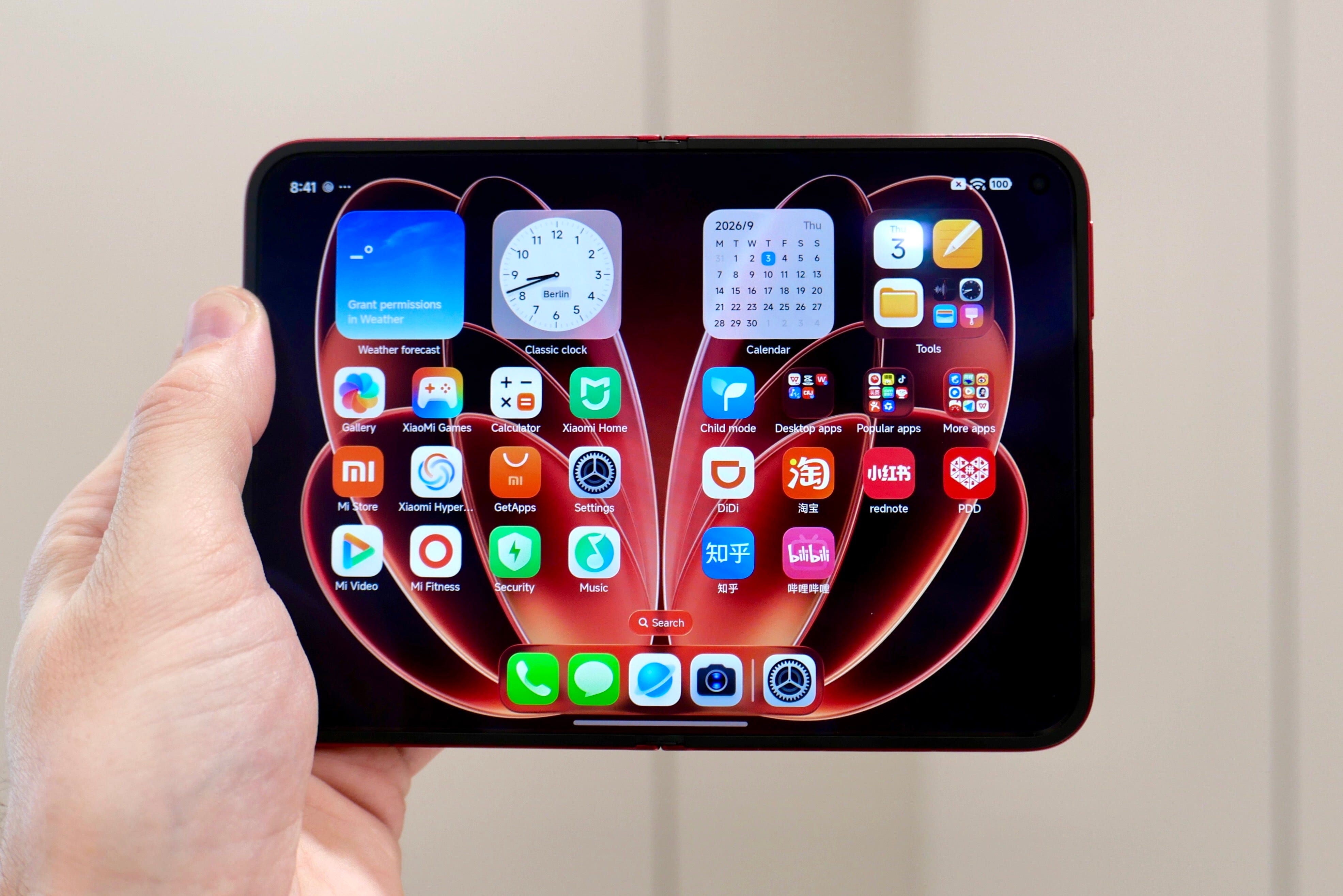
Based on my brief hands-on experience, there’s a lot to like about the Xiaomi 18 Fold. It outguns Samsung on specs, albeit in a slightly chunkier design, and the form factor should be a great fit for the Xiaomi-Leica camera experience.
Unfortunately, though, Xiaomi is only launching the 18 Fold in China right now. It starts at 10,999 yuan ($1,600) for a model with 12GB of RAM and 256GB of storage, going up to 14,900 yuan for 16GB + 1TB. There are black, white and red models available, as well as a limited-edition ceramic version only offered in the highest storage and memory tier.
China is, of course, the world’s leading market for folding phones by some distance, so we’ll see whether Xiaomi is able to make a splash with its latest effort. And in two days, we’ll have a better idea of how Apple plans to compete.